
Digitization in Product Costing – enabling Cost Engineering 4.0

Product Costing (PC) is a very good method to reduce purchase prices, minimize risks in quoting and is essential in profitability planning of new products.
In this blog article, you will not only learn how cost engineering helps to reduce prices, but also how digitization is now revolutionizing and redefining cost engineering.
While cost engineering has been an integral part of the automotive industry for many years, it has now also become successfully established in most other areas of discrete manufacturing.
The changes of recent years have played a major role in this. The high volatility of prices, starting with energy costs, but also raw material and labor costs, have led many suppliers to demand high price increases from their customers. In addition, new tariffs and regulations to reduce CO2 in the supply chain are also price drivers, but also cause high additional administrative costs.
These changes are also noticeable in classic purchasing methods such as category management strategy building. Whereas in the past the material group and thus the supplier base was analyzed once every 18 months and a new strategy was developed, today there is no longer one strategy per material group, but sub-strategies per region, which also have to be continuously revised and quickly adapted to new circumstances.
However, cost engineering has paid dividends not only in fending off price increases, but also in avoiding and reducing costs and CO2 during early design phase and product development. Most companies with discrete manufacturing have been able to negotiate supplier requirements much more successfully based on detailed open-book costing, but also massively improve the accuracy of new product costing, which in turn greatly reduces the risk of bringing new products to market in a volatile environment.
The current market changes have not affected all companies equally. In particular, companies that manufacture, purchase or supply large quantities or products with a long product life cycle have benefited greatly from treating suppliers as equal partners, since changing suppliers is becoming increasingly complex in the context of increasing digitization and everything must therefore be done to make the right decisions at the beginning in order to avoid changing suppliers later. Cost engineering is used here to make manufacturing processes, cost structures and CO2 consumption transparent across the supply chain, which forms the basis for negotiation at eye level. Collaborative planning and co-engineering are thus only made possible on a larger scale.
Changing partners in the production phase is so critical today because much more information is often exchanged than in the past, when only quantities and prices were exchanged fully automatically. Today, information on compliance, risk, quality, sustainability and future maintenance requirements is also exchanged fully automatically, and setting up this data exchange requires time and money on both sides, which is why ongoing supplier changes tend to be avoided. The higher the unit volumes, the more even small deviations affect profitability, and the longer the product life cycle, the more influences there are that require renegotiation of the framework conditions between business partners.
In detail, Cost Engineering offers the following advantages:
- Cost reduction potential: Through accurate Product Costing (PC), companies can identify potential areas where costs can be reduced. They can look for opportunities to reduce material costs, introduce more efficient production processes or take other measures to improve profitability.
- Pricing: Accurate product costing enables companies to set the optimal selling price for their products. By taking all relevant costs into account, they can ensure that the price is appropriate while generating a reasonable profit.
- Budgeting and control: PC helps companies budget and control their costs. By capturing all cost drivers, companies can better plan and monitor their expenses to ensure they stay within budget.
- Profitability analysis: PC allows companies to evaluate the profitability of individual products or product lines. They can compare costs with revenues generated to determine which products are profitable and which should possibly be revised or discontinued.
- Decision making: PC helps companies make informed decisions. When they know the costs of different options, they can make informed decisions about investments, product enhancements, or other business issues.
- Competitiveness: Accurate PC enables companies to offer competitive prices without compromising their profitability. This can help them differentiate themselves in the market and strengthen their position against competitors.

It is important to note that accurate and careful product costing is required to reap the full benefits. Inadequate costing could result in inaccurate pricing, financial loss, or other negative impacts. The benchmarking for suppliers quotations with should costing is also a key driver for cost reduction.
Nowadays, however, there are several challenges in PC:
- Data availability and accuracy: Accurate product costing requires comprehensive collection and analysis of data on the various cost factors. Companies may have difficulty obtaining accurate and reliable data, especially when it comes to external factors such as raw material prices, supplier costs or market fluctuations.
- Complexity of the cost structure: The cost structure of a product can be very complex, especially when dealing with complex production processes or different product variants. Allocating costs to individual products or product lines can be challenging, especially when it comes to shared resources or overhead costs.
- Know How: Employees with extensive experience in various manufacturing processes are increasingly difficult to find. This means that the benefits of product costing cannot be used for all purchased parts or all projects, which in turn means that considerable cost reduction potential cannot be exploited. On the other hand, new technologies are often introduced or required in the course of digitalization, for which there is also no or too little well-founded know-how in product cost calculation and purchasing.
- Uncertainty and volatility: Product costing also involves forecasting and simulating future cost factors. In a constantly changing economic environment, uncertainty and volatility in commodity prices, exchange rates, or other factors can affect the accuracy of costing.
- Consideration of indirect costs: In addition to direct production costs, companies must also consider indirect costs such as distribution costs, marketing expenses or general administrative costs. Accurately allocating these costs to products can be difficult and may require an appropriate cost allocation method. A typical problemis the allocation of the contribution margin, which can either be included directly in the machine hourly rates or shown separately.
- Product life cycle: Cost structures may change during the product life cycle. New products may require higher investments in research and development, while older products may face increasing manufacturing costs or decreasing demand. Product costing must consider the entire product life cycle and be able to deal with the changes.
- Competitive pressure: In competitive markets, price pressure can be high. Companies must be able to offer competitive prices while ensuring profitability. Product costing must be able to meet this challenge while balancing price and profit.
- Time-to-market: in almost all industries, the (expected) time-to-market has been drastically reduced in recent years, resulting in shorter development cycles. This also means for product costing that more products and variants have to be calculated in ever shorter time in order to optimally support R&D and purchasing. Of course, this also affects the sales process of suppliers, who have less time for the quotation phase and still have to achieve a high level of costing accuracy at a very early stage.
- Product carbon footprint: since, in addition to costs, the so-called Product Carbon Footprint (PCF)is becoming increasingly important in many industries, it is necessary to reconcile costs in relation to the PCF. This is especially true for industries such as automotive, which already face additional costs when exceeding a certain CO2 value. Here, the estimates that were common in the past have long since become inadequate. The EU's Carbon Border Adjustment Mechanism (CBAM) also means that more and more purchased parts from abroad require a detailed CO2 calculation.
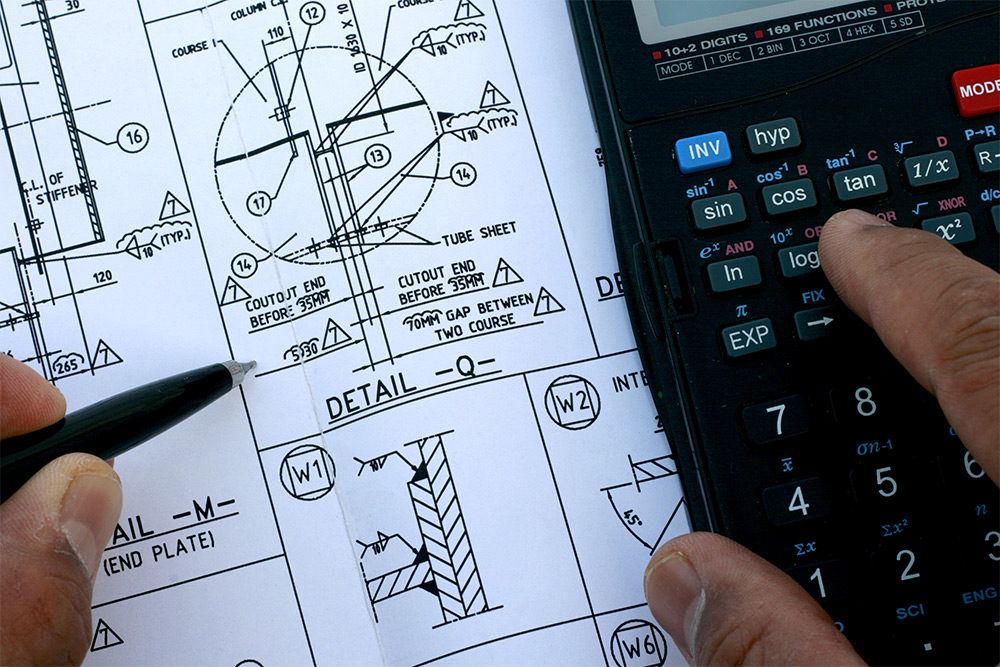
To meet these challenges, it is important to have good data sources and systems, apply accurate and consistant cost allocation methods, and conduct regular costing reviews to identify and adjust potential variances. Product cost calculation thus becomes one of the most important methods to sustainably reduce production and purchasing costs.
Cost Engineering vs. Negotiation - a contradiction in terms?
Some companies rely exclusively on structured negotiations such as those facilitated by eAuctions. However, PC and eAuctions are two different approaches that can be used in different situations. Here are some differences in when to use PC versus eAuctions:
Product Costing:
Product costing is normally used before setting the selling price of a product. It refers to internal analysis methods in which the costs of manufacturing, distribution and other relevant factors of a product are determined. PC is useful when companies want to understand their own costs and evaluate the profitability of individual products. It is an internal tool for pricing and monitoring financial performance.
eAuctions:
eAuctions, on the other hand, are a method of setting prices through competition between buyers. They are used in situations where products or services are subject to open competition and the price is determined by the bids of the participants. Auctions are used primarily in situations where the market determines prices and sellers want to get the highest possible price. This may be the case in industries such as commodity trading, online sales platform or procurement of services.
In some cases, both product costing and auctions can be combined. For example, companies can first calculate their internal costs and then use an auction to obtain the best price for selling their products or services.
It is important to note that the choice between product costing and auctions depends on various factors, such as the type of product, industry, competitive environment, and company goals. There is no one-size-fits-all solution, and companies must choose the method that is appropriate for their specific situation.
Let's briefly review the different terminology used in product costing...
What is meant by "Target Costing"
Target Costing is a cost management method used in the development and design of a product. It refers to a proactive approach in which the goal is to determine the cost of a product in advance to ensure that it can be sold at a profitable price. In target costing, the price of the product is determined based on market research, competitive analysis and customer requirements. Based on this target price, target costing is then performed to find out how much the company can spend on developing, manufacturing and distributing the product while achieving the desired profit.
Target costing involves a detailed analysis of the various cost factors that affect the product, such as material costs, manufacturing and assembly costs, distribution costs, profit margins, and other operations-related expenses. The goal is to control and reduce costs at each stage of the product life cycle to achieve the target price.
An important aspect of target costing is the collaboration between different departments of a company, such as design, development, purchasing, production, sales and controlling. By involving all relevant stakeholders at an early stage, creative solutions can be found to develop and manufacture the product cost-effectively without compromising quality, functionality or environmental friendliness.
The focus of target costing is on forward planning and proactive cost control to ensure that the product can be offered at a competitive price while the company achieves the targeted profit. It is an approach that aims to reduce waste, implement efficient processes, and maximize customer satisfaction through value for money.
What is meant by "Should Costing"
"Should Costing" is a method of cost management that focuses on evaluating and analyzing the expected manufacturing or procurement costs of a product. It refers to the determination of the "should" cost of a product based on a detailed analysis of components, materials, labor, production processes, and other cost factors. The term "should costing" is derived from the word "should", which in this context means what the cost of a product should be, based on a rational and informed analysis of the production processes.
The main objectives of Should Costing are:
- Cost transparency: By analyzing cost drivers and processes in detail, Should Costing enables companies to gain accurate visibility into the expected cost of a product. It helps companies develop a comprehensive understanding of how individual components, labor, and materials impact overall costs.
- Cost reduction potential: Should Costing identifies areas where costs can be reduced. It helps companies identify inefficient processes, excessive material costs, non-value-added activities and other wasteful factors. Based on this, companies can take action to reduce costs and improve efficiency.
- Basis for negotiation: Should Costing serves as a basis for negotiations with suppliers or subcontractors. By analyzing expected costs in detail, companies can set realistic target costs and negotiate prices and contract terms with suppliers.
- Continuous Improvement: Should Costing helps companies continuously improve their production processes, material procurement and cost structure. It promotes critical evaluation and identification of opportunities for cost efficiency and effectiveness.
Should Costing requires a thorough knowledge of products, the manufacturing process, material procurement and other cost factors. It can be performed by both internal teams and external experts to obtain an accurate picture of the expected costs of a product and identify cost optimization potential.

What is the Product Carbon Footprint (PCF)?
The PCF is a measure of the total amount of greenhouse gas emissions caused in the life cycle of a product, expressed in CO2 equivalents. The PCF is used to quantify and communicate the climate impact of a product. It has several applications and meanings:
- Evaluate environmental impact: The PCF enables companies to evaluate and compare the environmental impact of their products. By calculating the PCF, companies can determine how much their products contribute to global warming. This helps them identify the main sources of greenhouse gas emissions and take action to reduce emissions.
- Sustainability communication: The PCF serves as a communication tool to make the climate impact of a product transparent to customers, suppliers and other stakeholders. Companies can use the PCF as part of their sustainability reporting to demonstrate their commitment to climate protection and provide consumers with information that they can take into account when making purchasing decisions.
- Product improvement: By analyzing the PCF, companies can identify potential areas where they can improve their products and processes to reduce environmental impacts. This can include developing more energy-efficient products, using more sustainable materials, or optimizing production and transportation processes.
- Sustainable procurement: The PCF can also be incorporated into supply chain and procurement decisions. Companies can use the PCF to select more sustainable suppliers and materials and thus reduce their emissions along the entire value chain.
- Climate targets and commitments: The PCF helps companies track climate targets and commitments. By measuring and monitoring the PCF, companies can track their progress in achieving emissions reduction targets and make adjustments as necessary to meet their goals.
It is important to note that the PCF only looks at one specific type of environmental impact (greenhouse gas emissions) and does not include other environmental aspects such as resource use, water consumption or pollution. Therefore, it is advisable to combine the PCF with other sustainability indicators and assessments to get a comprehensive picture of the environmental impact of a product.
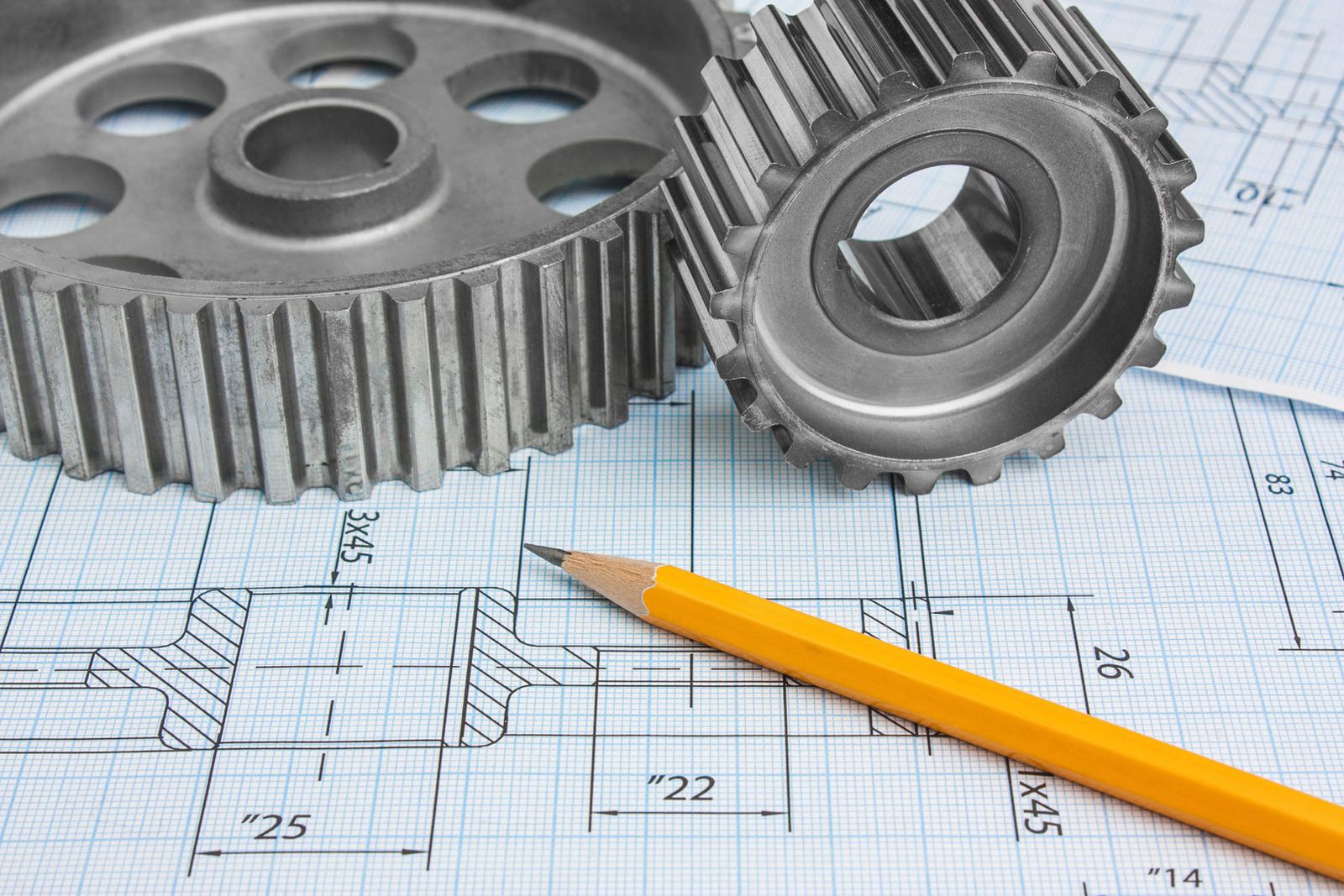
The Product Cost and Product Carbon Footprint calculation in different phases of the product life cycle
Throughout the product development process, various product costing methods can be used to analyze and control costs. Accordingly, specific product costing methods are used in the individual phases of product development:
- Concept phase: In this early phase of product development, various concepts and ideas for a new product are generated. At this stage, a rough cost estimate can be made using estimates and comparative data. These estimates are usually based on similar products or industry-specific averages, which of course makes simulations with new technologies and materials very difficult.
- Design phase: In the design phase, the product is designed and specified in more detail. Here, methods such as value engineering (value analysis) or design to cost (cost-oriented design) can be used. These methods aim to design the product to meet the desired functions and quality standards while controlling costs. Faster development processes additional factors such as weight and CO2 footprint increase complexity today.
- Development and prototyping phase: In this phase, prototypes are created and tested to refine and optimize the product. Detailed costing is performed here, based on the specific materials, labor, manufacturing processes and other cost factors used in the production process. This is done in synchronization with the ERP system, as this is usually where the most accurate data resides.
- Production phase: Even after the product has been launched, it is important to monitor and control costs in the life cycle. Here, target costing can be used to ensure that the product can also be offered at a competitive price over a longer period of time and that the planned profitability targets are achieved.
Of course, it should be noted that the use of product costing methods can vary depending on the company, industry and product. Often companies have several methods and tools in use in parallel, which are used by several cost calculation departments assigned to development, purchasing and sales.
Advantages of digitization in Product Costing
Now that many other departments are already benefiting massively from the advantages of digitization, for the first time the achievements of Industry 4.0 can be applied not only to production, maintenance and supply chain control, but also to development and product costing, and thus indirectly to the sustainability department as well as purchasing and sales.
Digitalization has brought several advantages for product costing:
- Automation: Digitization can automate manual and time-consuming tasks. This includes collecting cost information, calculating cost models, analyzing data and generating reports. Automation enables faster and more accurate product costing by minimizing human error and allowing more time to be spent analyzing and optimizing costs.
- Shorter time-to-market: automation can drastically shorten the product development process, which in turn creates massive competitive advantages, especially in innovation-driven industries with rapidly changing products.
- Reduction of purchasing costs: due to automation, a much larger portfolio of products can be supported by the product costing department. Experience has shown that the average cost reduction with active support by product costing is around 17%, which is significantly noticeable with a usually unsupported portfolio amounting to 25% of total purchasing with thus over 4% cost reduction potential, measured against the total purchasing portfolio.
- Use of real-time data: Digitization enables access to real-time data, which enables up-to-date and accurate product costing. Companies can directly access data from various sources, including supplier information, material prices, CO2 data, production data and other relevant factors. This enables improved accuracy and informed decision making.
- Integration of systems: Digitization allows different systems and software solutions to be integrated to seamlessly exchange and process data. This includes ERP systems such as S/4Hana, procurement or sourcing solutions, cost accounting systems, production planning systems and others. Integration enables smooth and efficient collaboration between different departments and improves data accuracy and availability for product costing.
- Simulation and scenario analysis: Digital tools enable companies to perform simulations and scenario analysis to test the impact of different cost factors at each stage of the product lifecycle. They can create "what-if" scenarios to evaluate cost changes, optimization options and other factors, saving all variants and scenarios as different versions of a bill of materials. This helps identify cost reduction opportunities and optimize profitability.
- Collaboration and communication: Digital tools enable improved collaboration and communication between the various stakeholders involved in product costing. Information can be shared and discussed more easily, leading to better coordination. This helps to ensure that all relevant parties such as development, purchasing, sales and controlling are on the same page and can work together to optimize costs.
- Inclusion of sustainability aspects: automatic consideration of the CO2 footprint at every stage of the product development process guarantees a significantly higher savings potential as well as faster compliance with new sustainability targets and other regulatory requirements.
- Avoiding inconsistencies: By structuring the calculation methodology in a SaaS solution, one can ensure that all departments use the same methodology and all product lines meet the same criteria.
- High degree of adaptation: due to the simple operation of modern solutions and new UX standards, even employees who do not use a tool every day can quickly and easily make calculations and thus create benchmarks for purchased parts, for example.
- Scaling options: Last but not least, it has to be said that only the latest technical development frameworks have made software solutions so powerful that they can also carry out complex simulations within seconds. Only the use of SaaS concepts enables the scaling of the IT solution for complex computing operations as well as scaling within the company and economical operation as a multi-client solution.
Digitization brings numerous benefits for product costing and helps companies to efficiently record, analyze and optimize their costs in combination with the CO2 footprint. It enables more accurate costing, faster responsiveness, and better decision-making for companies to increase profitability, set competitive prices, and systematically achieve sustainability goals.
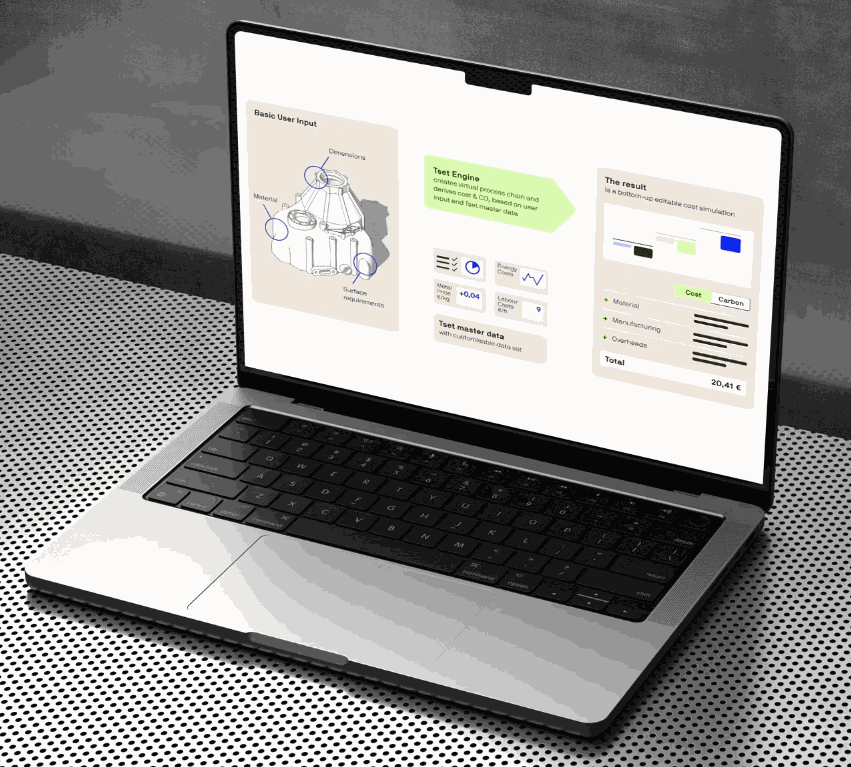
All these advantages are combined in a SaaS solution with Tset's new, innovative and unique software. Tset uses self-developed algorithms that are continuously improved with machine learning in combination with continuously updated master data from third-party providers, partners and customers to solve current challenges and offer customers high added value.
Visit tset.com for more information